
What Is an Orifice Plate?
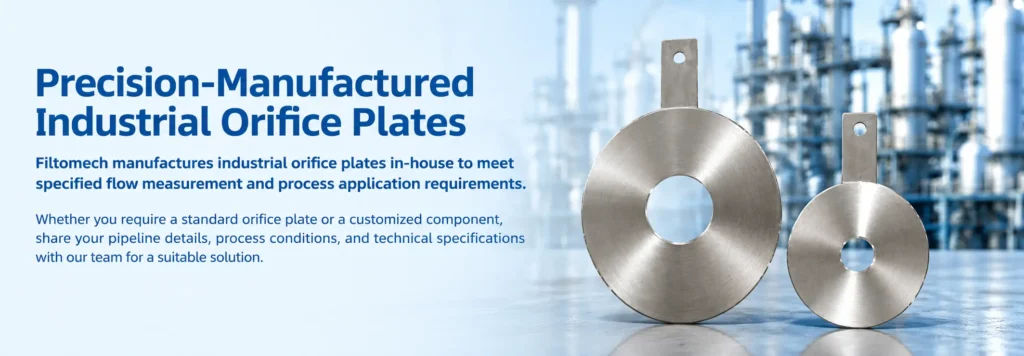
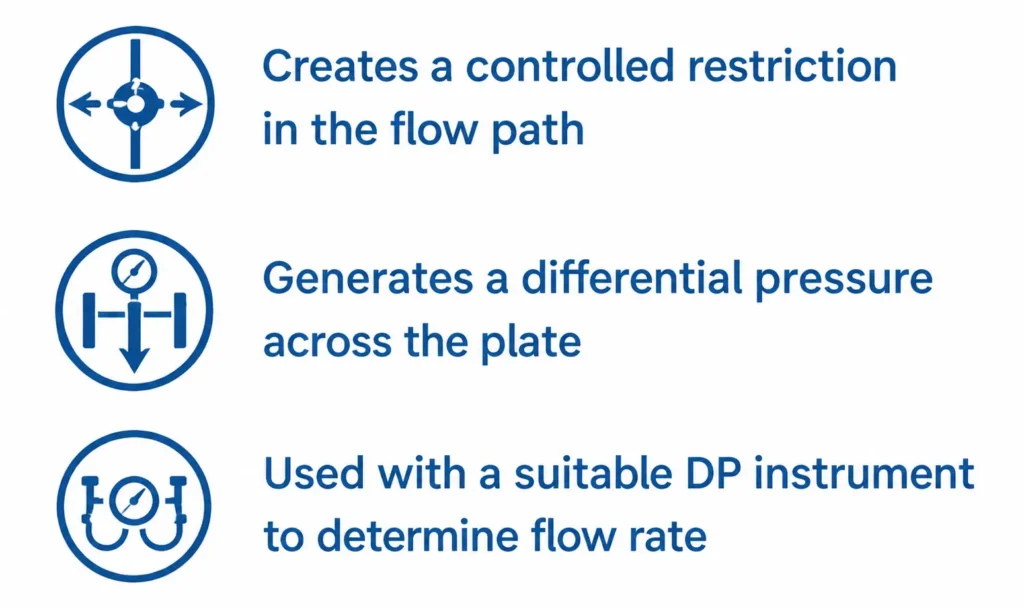
An orifice plate is a precision-engineered component installed inside a pipeline to create a controlled restriction in the flow of a process fluid. It is commonly used in differential-pressure flow measurement systems, where the pressure difference across the plate is measured to calculate the flow rate.
An industrial orifice plate typically consists of a flat metal plate with a carefully designed opening (bore). When fluid passes through this opening, its velocity and pressure distribution change, creating a differential pressure that can be measured using compatible instrumentation.
The plate’s design, bore diameter, material, thickness, and installation conditions influence its performance. Selecting the appropriate orifice plate is therefore important for dependable flow measurement and efficient process operation.
How Does an Orifice Plate Work?

The accuracy of the measurement depends on correct orifice plate sizing, proper installation, fluid properties, pressure tapping arrangement, and the suitability of the associated instrumentation.
Types of Industrial Orifice Plates
Concentric Orifice Plate
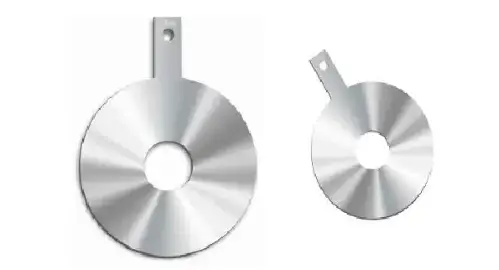
Circular opening (bore) positioned at the centre of the plate. It is widely used for suitable clean-liquid, gas, and steam flow measurement applications.
Eccentric Orifice Plate
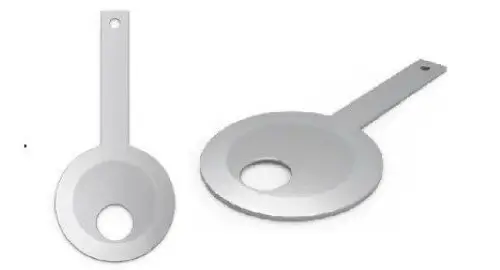
Opening (bore) offset from the centre. Its orientation can be selected to suit specific industrial flow measurement applications involving fluids containing entrained gas, vapour, or solids, depending on the process conditions.
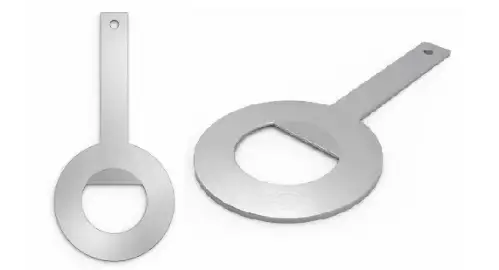
Segmental Orifice Plate
Segment-shaped opening. It may be considered for specific industrial flow measurement applications involving fluids with suspended solids or other specialized process requirements.
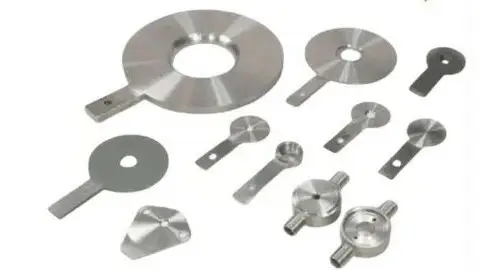
Custom-Designed Orifice Plate
Designed and manufactured around specified bore dimensions, pipeline sizes, material requirements, plate thicknesses, operating pressure, operating temperature, and project drawings.
Materials and manufacturing options
Material selection is an important consideration when specifying an orifice plate for an industrial application. The selected material should be compatible with the process fluid and suitable for the operating temperature, operating pressure, corrosion conditions, and applicable design requirements.
Depending on confirmed availability and project requirements, material options may include:
- Stainless Steel SS304
- Stainless Steel SS316
- Carbon Steel
- Other suitable materials upon technical evaluation
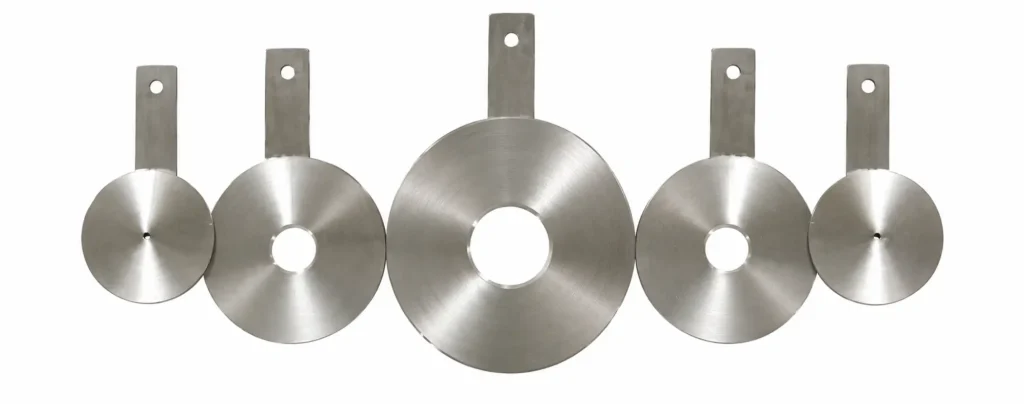
Orifice plates can also be specified according to required dimensions, bore geometry, plate thickness, surface finish, and relevant project documentation.
For a suitable recommendation, customers should share the process conditions and any applicable technical drawings or technical specifications with the Filtomech team.
Key features and benefits
- Precision-engineered opening for accurate flow measurement
- Application-specific material selection
- Compact and robust construction
- Compatible with differential pressure instrumentation
- Custom dimensions and configurations
- Suitable for liquid, gas and steam applications
Learn More about our Orifice Plate Assembly →
Applications of Orifice Plates






Orifice Plate Specifications and Custom Requirements
Selecting the right orifice plate requires an understanding of the pipeline configuration and process conditions. Customers can share the following technical information to support the technical evaluation.
- Pipe size (nominal or internal diameter)
- Operating temperature (normal & maximum)
- Process fluid (liquid, gas, steam, etc.)
- Flow rate (minimum, normal, maximum)
- Material (SS304, SS316, carbon steel, etc.)
- Pressure tapping arrangement
- Bore diameter (or flow details)
- Connection type (existing flange / installation)
- Plate thickness (as per design)
- Applicable standards / project requirements
- Operating pressure (normal & maximum)
- Quantity and delivery details
Orifice Plate vs. Orifice Assembly
An orifice plate is the individual component that creates a restriction in the pipeline. An orifice assembly is a more complete arrangement that incorporates the orifice plate with associated components, which may include flanges or carrier rings, gaskets, fasteners, and pressure tapping connections, depending on the design.
| Orifice Plate | Orifice Assembly |
|---|---|
| Individual component | Complete installation arrangement |
| Precision-designed opening | Includes plate + flanges, gaskets, fasteners, etc. |
| Selected by bore, material and process conditions | Selected by plate, piping, connections and instrumentation |
| Used as part of a flow measurement system | Provides mounting and connection arrangement |
Freaquently Asked Questions
Looking for an Orifice Plate for Your Industrial Application?
Get in touch with Filtomech to discuss your orifice plate requirements. Share your pipeline details, process conditions, material preferences, and technical specifications so our team can review your application and respond with the next steps.